A typical day for me as a (~pandemic~) student included waking up 10 minutes before Zoom class to make coffee, attend said Zoom class for x amount of hours, walk my dog, do my workout of the day, and study. This is something I can be pretty proud of: that I was able to fit in a regular workout routine, and do a few weightlifting competitions, while juggling the crazy stress of OT school (and work on the weekends!). In my humble opinion, these two areas go hand-in-hand pretty perfectly. I would even argue that fitness, or any physical activity, is essential in performing one’s desired occupations. In fact, fitness/sports/exercise IS an occupation!
So, naturally, for my final school project I wanted to delve into the field of functional fitness in OT. Here’s what I found from a 2014 systematic review from the European Review of Aging and Physical Activity that focused on functional training on muscle strength, physical functioning, and ADLs in older adults:
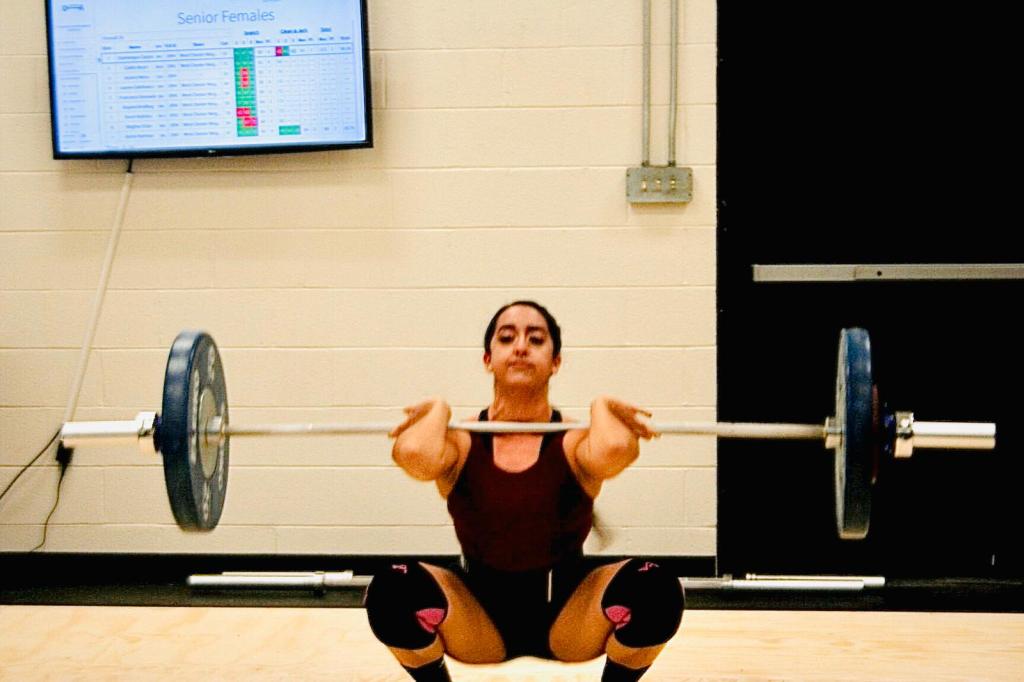
Fitness, or any physical activity, is essential in performing one’s desired occupations. In fact, fitness/sports/exercise IS an occupation!
~The Uplifting OT
Purpose
- The goal of functional training is to optimize the competence of an individual to do a certain task
- To increase independence
The Low-Down
- The functional training in the reviewed trials included a strength component, balance component, mobility tasks, or daily tasks
- Most of the training programs were 12 weeks, 2-3 times per week, 45-60 mins. per session.
- Both simple daily tasks (such as standing up from a chair) and complex daily tasks (such as vacuuming) require cooperation between multiple muscle groups and body motor elements in order to carry out the task. Some motor elements may be more essential than others.
Element-Based vs. Task-Specific-Based Functional Training
- Functional training designed to improve an individual’s ability to perform a certain daily task can target either essential elements of a task (element-based functional training) or all elements (task-specific-based functional training).
- Examples:
- Element-based functional training: performing exercises such as step-up or squats to improve lower extremity strength
- Task-specific-based functional training: combining functional movements with weight or speed, such as sit-to-stands while holding a weight
Results
- 3 trials showed that functional training is more effective than structured training alone for improving ADLs.
- Functional training facilitates multiple muscles and body motor elements acting together which simulated how people perform an ADL. The finding also supports the specificity of training principle.
- The best gains in performance are achieved when the training closely mimics the performance. Therefore, functional training may be a better option than muscle strength training alone if the goal is to reduce ADL disability in older adults.
- Further research is needed.
With love,
Dominique, OTR/L
Source:
Liu C., Shiroy, D.M., Jones, L.Y., Clark, D.O. (2014). Systematic review of functional training on muscle strength, physical functioning, and activities of daily living in older adults. European Review of Aging and Physical Activity,95–106.
 The Uplifting OT